Attic Spray Foam Insulation
The roofline is the biggest thermal battleground on a Surprise home, and most attics here are sitting at code-minimum insulation rather than the higher-performance level DOE and ENERGY STAR actually recommend for our climate.
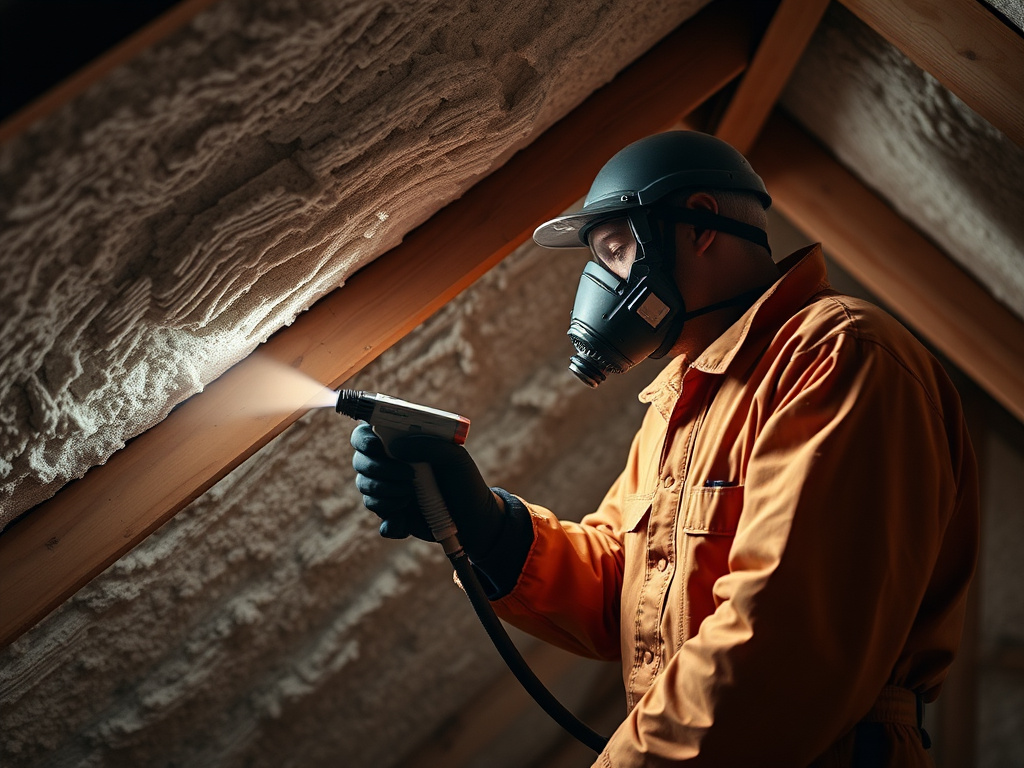
Surprise's roof decks work harder than almost any other surface on the house. A West Valley sun that pushes past 100°F for weeks at a stretch turns an asphalt shingle roof into a radiant heat source, and a vented attic underneath commonly climbs well past 130°F on a July afternoon. Because most Surprise homes were built within the last two decades — the city's median home dates to around 2005 — attic insulation here is typically at least at the R-30 minimum required under our Zone 2B energy code. Code minimum, though, is a floor, not a target: DOE and ENERGY STAR guidance for hot-dry climates like ours points toward an R-38 to R-49 band for meaningfully better performance, and plenty of Surprise attics were never upgraded past whatever the builder installed at closing.
Spray foam closes that gap in one application, and it does something batts and blown-in fiberglass can't: it seals as it insulates. Recessed can lights, top plates, plumbing stacks, and the duct boots where attic-run HVAC trunk lines meet the ceiling are all common leak points that loose-fill insulation lies over rather than sealing. For homes with ductwork run through the attic — standard in most Surprise production-home layouts — a roof-deck application that pulls the attic into conditioned space keeps that ductwork from ever seeing triple-digit attic temperatures at all. In older pockets of Surprise, and in nearby Sun City West or Youngtown where median construction dates back to the late 1980s or earlier, we also routinely find compacted, shifted, or pest-damaged insulation that's lost most of its rated value — a different starting problem with the same fix.
Why homeowners choose it
- Targets the roofline, the single largest area of direct solar exposure on a Surprise home, whether the attic is sitting at code-minimum R-30 or hasn't been touched since the original build.
- Seals penetrations around can lights, duct boots, plumbing stacks, and top plates in the same pass — gaps that loose-fill and batt insulation never actually close.
- Roof-deck application pulls attic-run ductwork into conditioned space, so supply air isn't picking up heat from a 130°F+ attic on its way to your vents.
- Cured foam doesn't compact, shift, or lose loft the way blown-in fiberglass can over 15-20 years.
- Moves a builder-grade, code-minimum attic into the higher R-38-R-49 performance band DOE and ENERGY STAR recommend for hot-dry climates.
Roof-deck vs. attic-floor application
Attic-floor application sprays foam across the joist bays, keeping the attic itself vented while insulating the living space below. It's the more budget-friendly route and works well when ductwork isn't a factor.
Roof-deck application sprays the underside of the roof deck and gable ends instead, bringing the whole attic inside the home's conditioned envelope. We lean toward this option whenever HVAC ductwork runs through the attic, since it protects that ductwork from extreme heat rather than just insulating around it.
- Attic-floor: lower cost, vented attic stays as-is
- Roof-deck: protects attic ductwork, higher upfront cost, best for homes with attic-mounted HVAC
Matching foam type to your attic
Both open-cell and closed-cell show up in Surprise attics. Closed-cell packs more R-value into less depth and adds rigidity, which matters when roofline clearance is tight. Open-cell costs less per board foot and covers well where depth isn't constrained. On some jobs we combine the two — a thin closed-cell layer for air and moisture control, open-cell to fill the remaining cavity — and we'll walk you through which mix fits your roof assembly during the on-site assessment.
Ideal for
- Newer Surprise homes at builder-grade R-30 attic insulation looking to move into the recommended R-38-R-49 range
- Homes with HVAC ductwork routed through a vented attic
- Older homes in Sun City West, Youngtown, or Surprise's pre-2000 pockets with compacted or degraded insulation
- Anyone with a hot second floor or an AC running long, hard cycles through the afternoon
What affects the cost
Attic Insulation questions, answered
Arizona's Zone 2B energy code sets R-30 as the minimum for attic insulation, and that's what most Surprise homes built in the last two decades have. DOE and ENERGY STAR guidance for hot-dry climates recommends going further, into an R-38 to R-49 range, for meaningfully better performance. Spray foam is one of the most direct ways to move a code-minimum attic up into that recommended band, since it adds both R-value and a continuous air seal at the same time.
It depends heavily on where your attic starts. A newer Surprise home already sitting at code-minimum R-30 will typically see a smaller jump than an older, poorly sealed attic in Sun City West or Youngtown. Industry estimates put achievable cooling-cost reductions for a poorly insulated home in the 30-50% range, though your actual number depends on your home's current insulation, duct location, and how tight the rest of the envelope is — exactly what a free on-site assessment is for.
Attic Insulation done right, by a local Surprise crew
Attic Insulation isn't a commodity — the result depends entirely on how carefully it's planned and installed for your specific home and Surprise's real desert climate. We assess what your house actually needs, prep and air-seal properly, and install to your Zone-2B-appropriate R-value target, so the work delivers the comfort and savings it's supposed to.
We serve Surprise, Peoria, Sun City West, Waddell, Litchfield Park, El Mirage, and Youngtown. Every job starts with a free, no-pressure quote.
Just as important, we treat your home like the system it is. Insulation, air sealing, and ductwork all interact, and getting one right while ignoring the others leaves comfort and savings on the table. When we scope your attic insulation, we look at how it fits the whole picture — so the finished result performs the way it should, holds up through a genuine Surprise summer, and actually lowers the bills you feel every month.
Free assessment
We evaluate your home and give you a clear, itemized quote.
Expert install
We prep, air seal, and install your attic insulation to spec — clean and on schedule.
Savings you can feel
A cooler home, lower cooling bills, and honest advice about what your home needs.
Related services
Ready for a free attic insulation quote?
Tell us about your home and we'll put together a clear, no-pressure spray foam insulation quote — built for Surprise's real desert heat.